Address
304 North Cardinal
St. Dorchester Center, MA 02124
Work Hours
Monday to Friday: 7AM - 7PM
Weekend: 10AM - 5PM
Address
304 North Cardinal
St. Dorchester Center, MA 02124
Work Hours
Monday to Friday: 7AM - 7PM
Weekend: 10AM - 5PM

Understand why you feel drained after social events. Learn the root causes and practical strategies to protect your energy and socialize without exhaustion.
You said yes to the party, the dinner, or the team-building event. The conversation flowed, you shared laughs, and on the surface, everything seemed fine. Yet, hours later or the next day, a profound exhaustion sets in. It is more than just tiredness; it is a heavy, mental fog accompanied by a sense of being completely emptied. Your body feels slow, your mind is numb, and the thought of any further interaction is overwhelming. If this experience is familiar, you are likely dealing with the specific type of fatigue that comes from social depletion. This is not a personal failing, but a signal from your mind and body that your energy resources have been overdrawn.
Many people quickly label this feeling as introversion. While introverts typically recharge alone and can be more sensitive to external stimulation, the experience of feeling drained after socializing is not exclusive to them. Extroverts can also experience this under certain conditions. The root causes are often tied to fundamental psychological and neurological processes.
Social interaction is a complex cognitive task. Your brain is constantly working, processing verbal and non-verbal cues, formulating responses, managing your own expressions, and navigating the unspoken rules of the group. This is known as cognitive load. For some, this load is light and enjoyable. For others, it is a demanding, high-stakes activity that consumes a significant amount of mental energy.
Furthermore, social situations often require a degree of performance. You might feel pressure to appear a certain way—engaged, happy, interested, or witty. This “impression management,” or the act of curating your social self, is depleting. When you are constantly monitoring and adjusting your behavior to fit in or meet expectations, you are expending emotional labor. This labor, over time, drains your internal reserves, leaving you with little energy for yourself.
Understanding the specific triggers can help you identify your personal energy leaks. Here are some of the most common reasons social events leave you exhausted.
If you want to change the outcome—to leave a social event feeling content instead of depleted—you need to address the root cause. This goes beyond simple tips like “get more sleep.” It involves building awareness around your energy and learning to protect it proactively. This is where a shift in mindset and practical tools become vital.
Think of your energy as a finite resource, like the battery on your phone. Some activities charge you, while others drain you. Socializing, especially in certain contexts, is a high-drain activity. The goal is not to avoid it entirely, but to learn how to manage your usage so you do not end up with a dead battery at a critical moment. Protecting your energy allows you to show up more fully and authentically in your relationships and responsibilities.
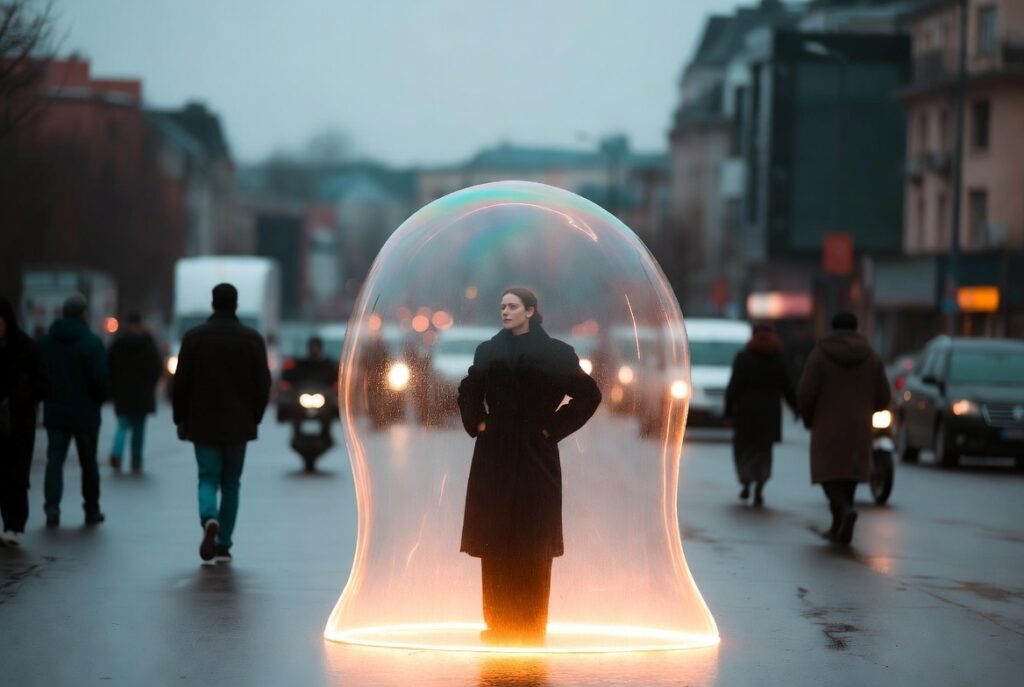
Implementing a few key strategies can make a significant difference in how you experience social interactions.
While behavioral changes are powerful, sometimes the feeling of being drained is tied to more subtle, energetic levels. You may be sensitive to the general “vibe” of a room or find that certain individuals consistently leave you feeling sapped. This is a common experience for empaths and highly sensitive people. In these cases, you need tools that go beyond time management and address the energetic exchange itself.
Learning to shield your personal energy is a skill. It involves visualizing a protective barrier around yourself, one that allows positive connection to flow in but filters out the chaotic or negative energies of others. It is about consciously choosing what you absorb, rather than being a passive sponge for the emotions and stress in your environment.
For those seeking a structured method to master this, the DreamManifestor123 program offers specific techniques. This resource provides guided processes to help you understand your energy body, set firm energetic boundaries, and cleanse your field after challenging interactions. It is a practical guide for anyone who wants to engage with the world without constantly feeling drained by it.
The exhaustion you feel after socializing is a real and valid signal. It is not something you have to accept as an inevitable part of your life. By understanding the root causes—from cognitive overload and emotional labor to energetic sensitivity—you can begin to make different choices. You can learn to navigate social landscapes with intention, using boundaries and protective practices to safeguard your peace.
The ultimate goal is to reach a point where socializing is a choice that adds to your life, not an obligation that depletes it. You can connect with others, enjoy their company, and still return home feeling whole, at peace, and ready to enjoy your own company. It is about finding a sustainable balance that allows you to be in the world without being of its drain.