Address
304 North Cardinal
St. Dorchester Center, MA 02124
Work Hours
Monday to Friday: 7AM - 7PM
Weekend: 10AM - 5PM
Address
304 North Cardinal
St. Dorchester Center, MA 02124
Work Hours
Monday to Friday: 7AM - 7PM
Weekend: 10AM - 5PM
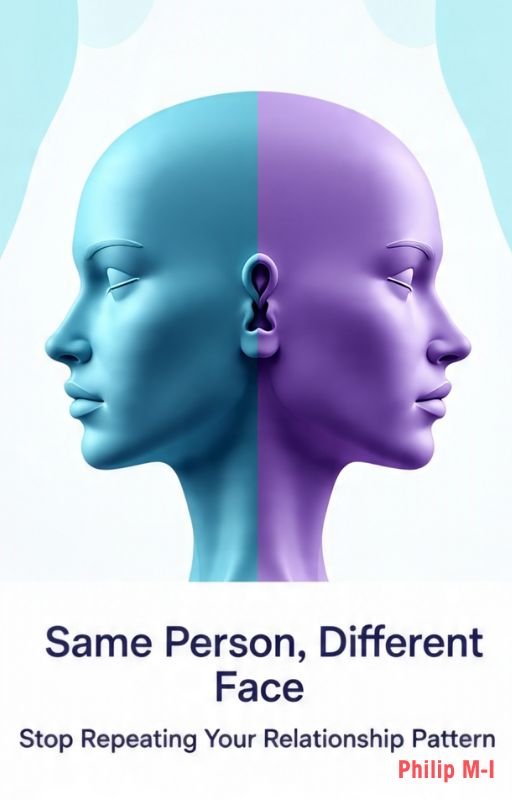
Learn the 5 clear signs of a toxic relationship pattern. Understand the root cause and learn how to break the cycle for healthier, lasting love.
5 Clear Signs You’re Repeating a Toxic Relationship Pattern
Have you ever found yourself in a new relationship, only to get that sinking feeling of familiarity?
The arguments feel the same, the emotional triggers are identical, and the outcome seems frustratingly predictable, even with a completely different person. You can feel something is wrong in your relationships, but you can’t quite put your finger on the root cause. This experience is more common than you might think, and it often points to a deeply ingrained toxic relationship pattern.
Recognizing these patterns is the first and most crucial step toward breaking free from them. It’s not about blame; it’s about understanding the subconscious blueprint you might be carrying from past experiences. Let’s explore the five clear signs that indicate you might be repeating a cycle that no longer serves you.
Many of us are conditioned to believe that a whirlwind romance, filled with intense passion and immediate chemistry, is the ultimate relationship goal. However, this “spark” can sometimes be a warning sign, not a green light. If you consistently find yourself drawn to partners who create a rollercoaster of emotions—extreme highs followed by confusing lows—you might be mistaking drama for love.
This pattern often stems from a childhood where love was conditional or intertwined with conflict. Your nervous system learns to associate love with a state of high alert. In adulthood, a stable, secure partner might feel “boring” because they don’t activate that familiar, adrenaline-fueled cycle. The intense initial connection is frequently a recognition of a dynamic you are programmed to navigate, not a sign of a healthy, lasting partnership.
Take a moment to reflect on your past relationships. Do the justifications sound familiar? “He’s just stressed at work,” “She has a lot on her plate right now,” “He doesn’t mean to be hurtful, he just has a bad temper.” If you notice a recurring theme in the excuses you make for your partner’s behavior—whether it’s emotional unavailability, disrespect, or unreliability—it’s a strong indicator of a toxic relationship pattern.
This habit of over-empathizing and justifying poor treatment often comes from a desire to avoid conflict or a deep-seated fear of abandonment. You become an expert in rationalizing the red flags, effectively convincing yourself that the problem is temporary or situational, rather than a fundamental aspect of the person you’re with. The common denominator in all these equations is you, and the pattern of accepting less than you deserve.
In a healthy relationship, both partners feel safe to express their needs and work together to meet them. In a repetitive toxic pattern, your needs are consistently placed on the back burner. You might start a relationship by communicating what you require—be it quality time, emotional support, or respect for your boundaries—but you gradually find yourself shrinking to accommodate your partner.
This leads to a feeling of resentment and emptiness. You may notice that you are always the one adjusting your schedule, suppressing your opinions, or sacrificing your hobbies. The relationship becomes a one-way street where your role is to give, and your partner’s role is to take. This dynamic reinforces a belief that your needs are not important, a belief that likely originated long before your current relationship.
Do you often feel like a therapist or a savior in your relationships? This “fixer” archetype is a classic component of a toxic relationship pattern. You are drawn to people who seem broken, troubled, or in need of rescue. Your sense of purpose and self-worth becomes tied to your ability to help them overcome their struggles.
While compassion is a beautiful trait, this pattern is problematic because it creates an inherent power imbalance. The relationship is not built on a foundation of two whole, equal individuals, but on a rescuer and a project. This is exhausting and ultimately futile, as you cannot heal another person. When the relationship ends, you’re left with not only heartbreak but also a sense of failure for not having “fixed” them, further damaging your self-worth and setting you up to repeat the cycle with a new “project.”
This is perhaps the most telling sign. The dynamic you have with your partner—the way you argue, the roles you play, the emotional atmosphere—feels like a replay of a significant relationship from your past. This is often a replication of the dynamic you witnessed between your parents or the one you had with a primary caregiver.
For example, if you had a critical parent, you might unknowingly seek out critical partners. If you had a parent who was emotionally absent, you may find yourself perpetually chasing emotionally unavailable people. Your subconscious mind is trying to resolve old wounds by recreating similar scenarios, giving you a chance to “win” this time. Unfortunately, without awareness, you simply re-live the same pain.
Recognizing these signs in yourself can be unsettling, but it is also incredibly empowering. Awareness is the light that allows you to see the pattern, and with that light, you can begin to choose a different path. Breaking a toxic relationship pattern requires more than just willpower; it requires a conscious rewiring of your subconscious attachments and beliefs about love.
This is where targeted guidance can make a profound difference. Understanding the “why” behind your patterns is the key to permanent change. For those ready to do the work and break the cycle for good, the Same Person Different Face Stop Repeating Your Fail Relationship Pattern guide offers a structured path forward.
This resource is designed to help you identify the root causes of your relationship choices and provide practical strategies for creating healthier dynamics. It moves beyond surface-level advice to help you heal the core wounds that keep you trapped in a loop. By working with the principles in the Same Person Different Face program, you can learn to recognize red flags early, establish firm boundaries, and ultimately attract a partner who offers the security, respect, and genuine connection you deserve.
The journey to breaking a toxic relationship pattern begins with a single, brave decision: the decision to look inward. By acknowledging the pattern, you have already taken the most difficult step. The next step is to equip yourself with the right tools to build a new, healthier pattern for your future.